The Hard Days Count Too
Most of what gets kept about family life is the good stuff. The birthday, the beach, the first steps. Nobody frames the night everyone in the house was sick.
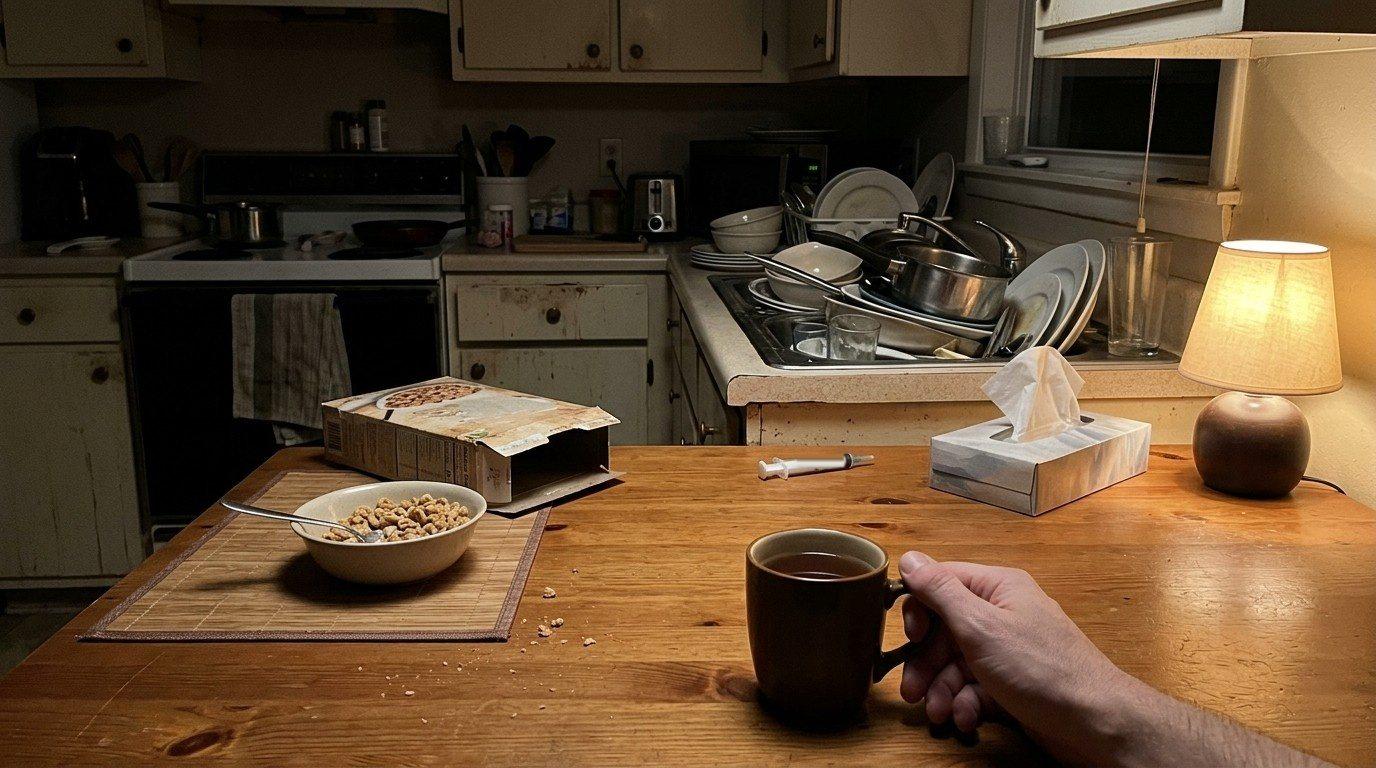
A while ago, our three-year-old and my wife both had fevers on the same night. Our one-year-old was teething and up every hour. So it was just me, walking a crying baby up and down the hallway at 3am, checking on a hot little forehead, and bringing water to someone who usually takes care of all of us.
I wasn't doing anything heroic. I was just existing. Trying not to break down. Trying not to overreact to every cough. My head kept running through everything I wished I could do and couldn't. You can't make a fever go away, or a tooth come through faster. You just keep going and hope it's enough.
By morning the baby had finally fallen asleep on my chest on the couch, with a cartoon on low for the three-year-old. Nobody was better yet. But we'd made it through the night, and that was the whole job.
But hard days as a parent are part of the deal, and for a lot of us they happen often. And leaving them out makes the record a bit dishonest. Look back at a year of only highlights and it can feel like everyone else was doing fine and you weren't there.
Writing down a hard day doesn't mean dwelling on it. It's usually the opposite. A rough day put into a few words gets smaller. It stops being a vague cloud and becomes a thing that happened, with edges.
And something surprising happens later. You read back a hard week from six months ago and realize you got through it. The sleep regression ended. The new job settled down. The worry you were sure would last forever is one you'd half forgotten. That's worth having in writing, for the next rough week.
There's no need to make it pretty. A hard-day entry can be one line. Everyone was sick. We made it to bedtime. That counts.
Six questions for a rough day
Pick one. You don't need all six.
- What was the hardest part of today? Just name it. One sentence.
- What helped, even a little? A walk, a show, a text from a friend, the five minutes the baby slept on you.
- Who showed up? Your partner, a grandparent, a neighbour, the teacher who sent a kind note.
- What did you get through? Bedtime. The meeting. The appointment you'd been dreading.
- What was one thing that was okay? Not good. Just okay. There's usually one.
- What do you need tomorrow? More sleep, help with pickup, an early night. Write it down, then maybe say it out loud to someone.

If the hard days are stacking up, and especially if it's been weeks rather than days, tell someone: your partner, a friend, your doctor. In the year after a baby, a low mood that won't lift can be postpartum depression, which affects both parents, is common, and is very treatable (Postpartum Support International has help for mothers and fathers). Writing things down helps, but it isn't meant to be the only thing holding you up.
A rough day is just a day
In Wonderwhile™, a rough day is just a day. There's no streak to break and no minimum. You and your partner each add whatever you've got, even a few lines, and the next morning it comes back as one honest story of the day you both had. Sometimes reading your partner's side of a hard day is the most comforting part.