The Words Your Kids Say Wrong (Write Them Down Before They're Gone)
One day they just say it right. Nobody tells you it's the last time.
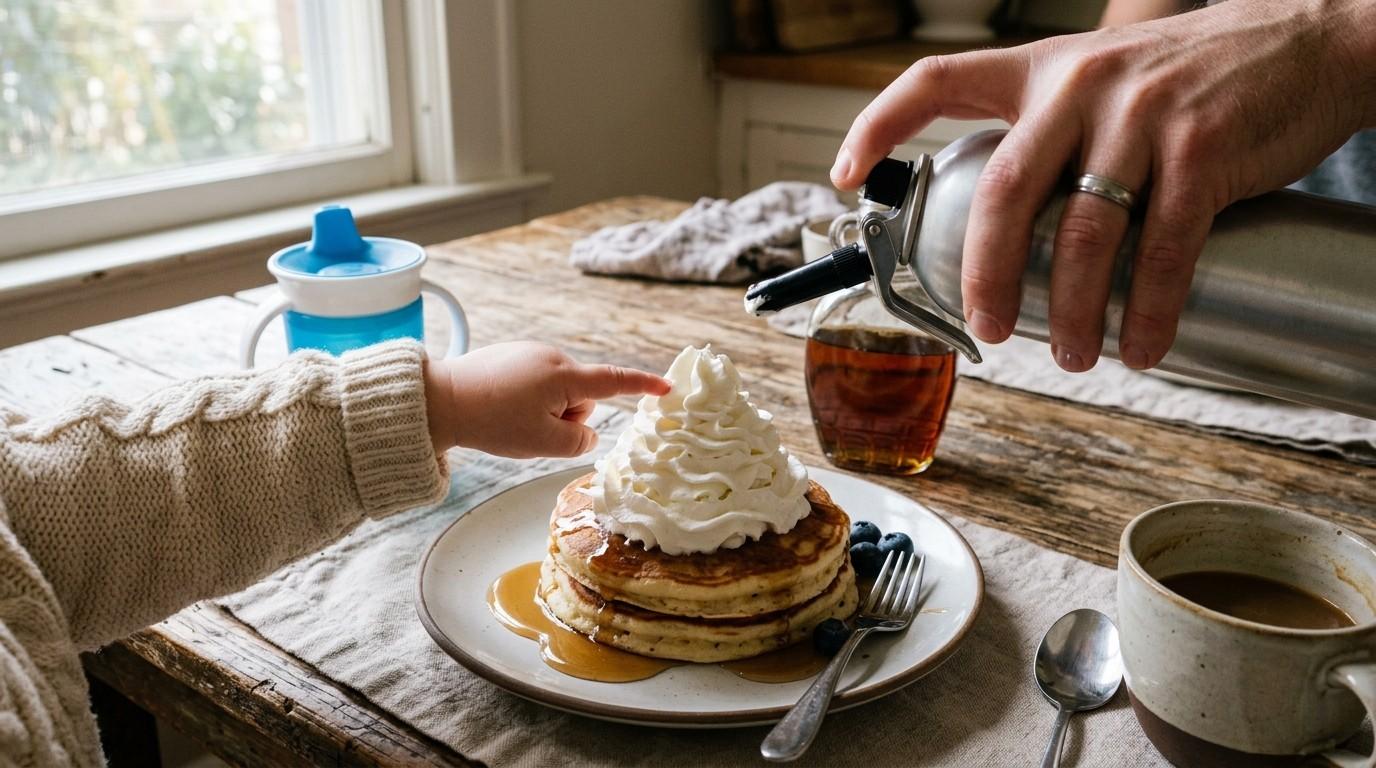
For about a year, whipped cream in our house was "lip cream." It went on pancakes, on hot chocolate, and occasionally straight into a small open mouth. Nobody corrected it, because why would you?
Then one Sunday it was "whipped cream." No ceremony. It had just changed, and none of us could say exactly when.
That's how it goes with the words kids get wrong. They arrive suddenly, they're used a hundred times a day, everyone in the house starts saying them too, and then they're gone without a goodbye. Most families can remember one or two years later. Almost nobody can remember all of them.
The kinds of words kids get wrong
Once you start listening, you'll notice they fall into a few types. It helps to know them, because it makes them easier to catch.
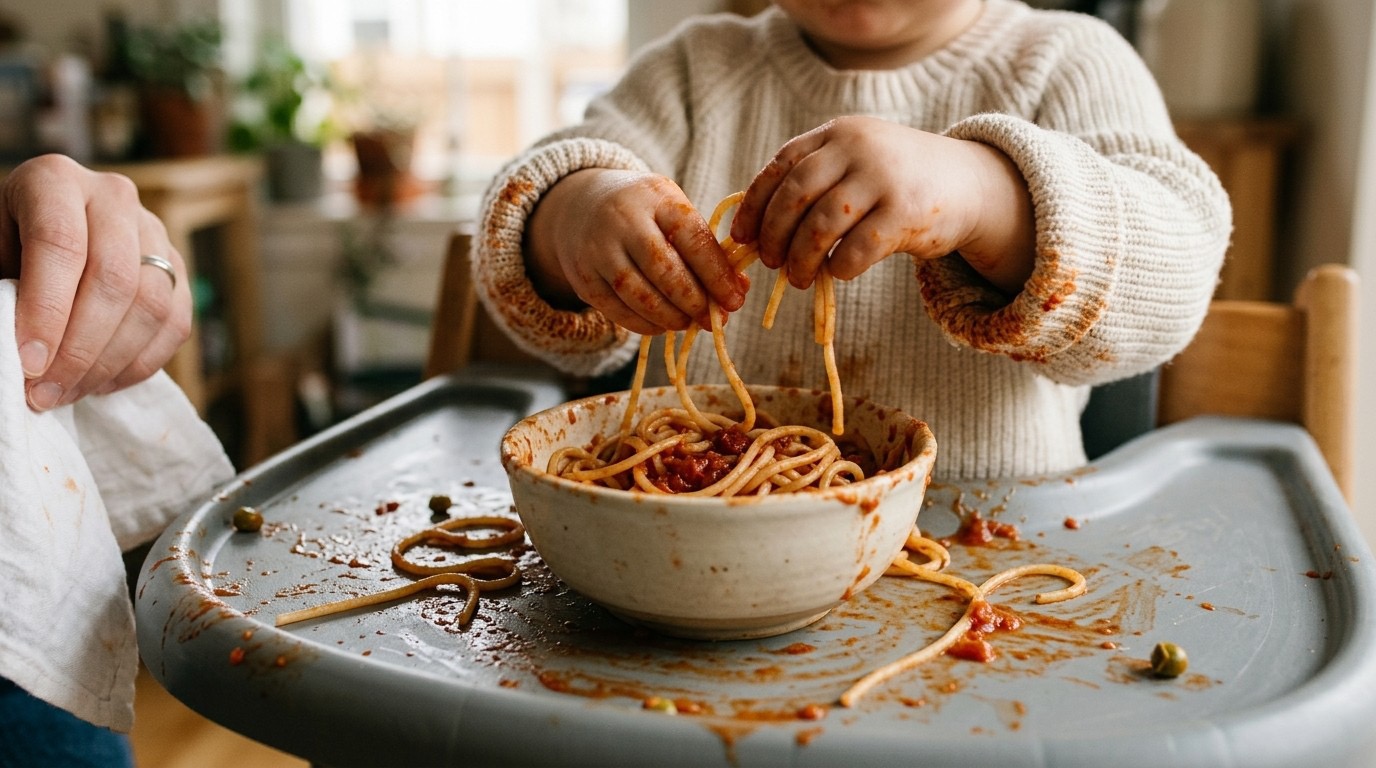
Swapped sounds. Pasghetti. Aminal. Callerpitter. Hostipal. The sounds are all there, just in a different order. Speech folks have a name for it (metathesis), and it's a completely normal stage of learning to talk.
Shortened words. "Nana" for banana. "Mo" for more. "Raff" for giraffe. Kids keep the part of the word they can hear best, usually the stressed syllable, and drop the rest.
Invented words. These are the best ones. A kid who doesn't know a word builds one out of parts they do know: "lip cream," "nose glasses" for sunglasses, "snow ice" for slush. They're often more logical than the real word.
Grammar that's too correct. "I goed." "Two mouses." "She runned fast." This one is actually a good sign. They've learned the rule (add -ed, add -s) and are applying it everywhere, before they learn the exceptions.
Misheard phrases. Song lyrics, prayers, things adults say. "Olive, the other reindeer." "Harold be thy name." Write these down exactly. They're gone the moment someone explains.
Names for people. Grandparents especially. A lot of family nicknames ("Gaga," "Bop," "Ama") started as a toddler's first try at a name and simply stuck for good.
What to write down
The word on its own is nice. The word with a little context is much better, because in ten years you'll want the story, not just the spelling. For each one, get:
- The word, spelled how they say it. Brefkist.
- What it means. Breakfast.
- Who said it. Especially if you have more than one kid. You'll be sure you'll remember. You won't.
- Roughly when. Month and year is plenty.
- How it's used. The sentence it showed up in, word for word.
- When it stopped. When you notice they've switched to the real word, add a line. Knowing a word lasted from March to October is part of the story.
If you can, grab a short voice memo too. The way a three-year-old says "callerpitter" is impossible to spell.
Should you correct them?
Mostly, there's no need. Kids grow out of these on their own, and a lot of the fun disappears if every "pasghetti" gets fixed.
If you'd like to help gently, the usual advice from speech therapists is to repeat it back the right way, without making a thing of it. They say "Can I have mo pasghetti?" You say "Sure, here's more spaghetti." That's it. They hear the real word without feeling corrected.
And if you're ever worried about how your child's speech is coming along, ask your pediatrician. Mixing up sounds is normal. They can tell you what's normal for your kid's age.
The ones that stay
Here's a thing that happens in a lot of families. The kid grows out of a word, but the family doesn't. Years later, everyone still uses the kid's version, including the kid, who now rolls their eyes about it.
Those words become part of how your family talks, a tiny private language. It's worth knowing where they came from. "We call it that because when you were two..." is a story your kids will want to tell their own kids someday, and they can only tell it if someone kept track.
Making it easy
The hard part isn't caring about these words. It's remembering to write them down in the moment, usually while you're also cutting up a waffle. A few things that help:
- Keep one list. A single note on your phone, or a sheet of paper on the fridge. Not five places.
- Write it the same day. You think a word is unforgettable. By Friday you'll be arguing about whether it was "aminal" or "amimal."
- Make it a two-person job. Kids say different words around different people. Whoever hears it first writes it down.
- Add the stop date. Most lists only have the start. The ending is the bittersweet part, and the part you'll care about most later.
Wonderwhile™ has a page for exactly this, called Words. Each kid gets their own list, both parents can add to it, and when a word gets outgrown you mark it and it moves to an "outgrown" section with its dates. Fair warning: the outgrown list grows faster than you'd think.
More small things worth keeping: 46 prompts for busy parents.