Will My Kid Remember This? What the Research Says About Early Memories
The short answer is no, not most of it. The longer answer is a lot more hopeful.
You're watching your kid do something wonderful. The first real snowman. The bedtime question that comes out of nowhere. The whole-body laugh at a joke that wasn't funny. And a quiet thought shows up right behind it: they won't remember this, will they?
Mostly, no. But that's not the end of the story, and what you do afterward changes more than you'd think.
The short answer
Psychologists call it childhood amnesia. Adults remember almost nothing from before about age 3 or 4, and only scraps from the few years after that.
What's less obvious is when the forgetting happens. To find out, Patricia Bauer and Marina Larkina at Emory University recorded 83 three-year-olds talking with their mothers about things they'd done recently, like a trip to the zoo or a birthday party. Then they split the kids into groups and brought each group back once, at a different age between 5 and 9, to ask about those same events.
Here's what they found (Emory's summary of the study):
- At 5, 6 and 7, kids still remembered 63 to 72 percent of those events.
- At 8 and 9, they remembered about 35 percent.
So the forgetting isn't slow and steady. A 6-year-old can still tell you about the zoo trip from when they were 3. By 9, most of it is gone. The researchers put it plainly: around age 7 is when the earliest memories tend to fade.
It isn't a switch that flips on a birthday, and kids don't lose everything. But the early preschool years get much harder to reach somewhere between 7 and 9.
What about the memories we think we have?
Ask a room of adults for their earliest memory and a few will describe their crib, or their first steps. Researchers at City, University of London and the University of Bradford surveyed 6,641 people about exactly this (the study). Nearly 4 in 10 said they remembered something from age 2 or younger, and 893 claimed a memory from age 1 or younger.
The researchers think most of those memories are built, not recalled: a real fragment or two, stitched together with photos and stories the family told over the years until it feels like remembering.
Read that again as a parent. The stories you tell your kids can become the memories they carry.
How a family talks about the past seems to shape memory in other ways too. When Qi Wang at Cornell compared 256 American and Chinese college students, the Americans' earliest memories were almost six months earlier on average (Cornell's summary). She linked the gap to culture, including how much attention goes to a child's own experiences and feelings.
Why it happens
Researchers are still working out exactly why, but a few pieces are clear.
Young brains are under construction. In the first years, the part of the brain that stores memories is adding new cells at a fast pace. In a 2014 study in Science, mice with more of that growth forgot faster, and slowing it down helped young mice remember. That's animal research, so it's a clue, not proof, but it fits what we see in kids.
Words matter. In a clever New Zealand study, toddlers played with a "magic shrinking machine" that made big toys small, and were tested six months to a year later (the study). Many still recognized the toys. But in no case did a child describe the game using a word they didn't know back when they played it. Even after their vocabulary grew, the memory stayed stuck at the words they had at the time.
A sense of "me" is still forming. Remembering your own life takes knowing it's your life: that this happened to me, then. Toddlers are only starting to build that.
What it isn't: a sign that something is wrong, or that the early years don't count. It happens to everyone.
It still matters
A day your kid won't remember is still a day they lived. It's part of how they learned what home feels like, who comes when they cry, what's funny in your family. The memory fades. What it taught them doesn't.
And here's the part nobody warns you about: you'll forget most of it too. Not the big days. The ordinary Tuesday. What they called the dog this month. The thing they said in the car that made you both laugh so hard you missed the turn. By the weekend it's blurry. In a year it's gone, along with everything else that happened that week.
Three things that help them keep more
1. Talk about it afterward, in detail
This is the one with the strongest research behind it. Psychologists call it elaborative reminiscing: going back over a shared experience together, with lots of detail, open questions and feelings, and following your kid's lead.
Elaine Reese and Rhiannon Newcombe at the University of Otago in New Zealand followed 115 mothers and their toddlers. One group of mothers was coached for a year to talk about the past this way; the other carried on as usual (the study, in Child Development). By 2½ and again at 3½, the coached mothers' kids told richer, more detailed stories about things they'd done.
Then the researchers checked back, 14 years later. At 15, the teens whose mothers had been coached told more coherent stories about the turning points in their lives, hard ones like a parental divorce or being bullied online, with more insight into how those events had shaped them. They also reported fewer symptoms of depression and anxiety (Otago's summary). It's one group of families, and the study coached mothers, not fathers. But a year of better conversations with a toddler still showed up when that toddler was 15.
The difference is easy to hear:
- Less helpful: "Did you have fun at the zoo?" (Answer: "Yeah.")
- More helpful: "Remember the giraffe? What did it do with its tongue? How did that feel when it got close?"
A few things that make it work:
- Ask open questions. What, who, how. Not yes or no.
- Add details back. "And then it started raining, remember? We ran all the way to the car."
- Follow their lead. If they want to talk about the gift shop instead of the giraffes, talk about the gift shop.
- Name the feelings. "You were a bit scared of the loud noise, and then you were brave."

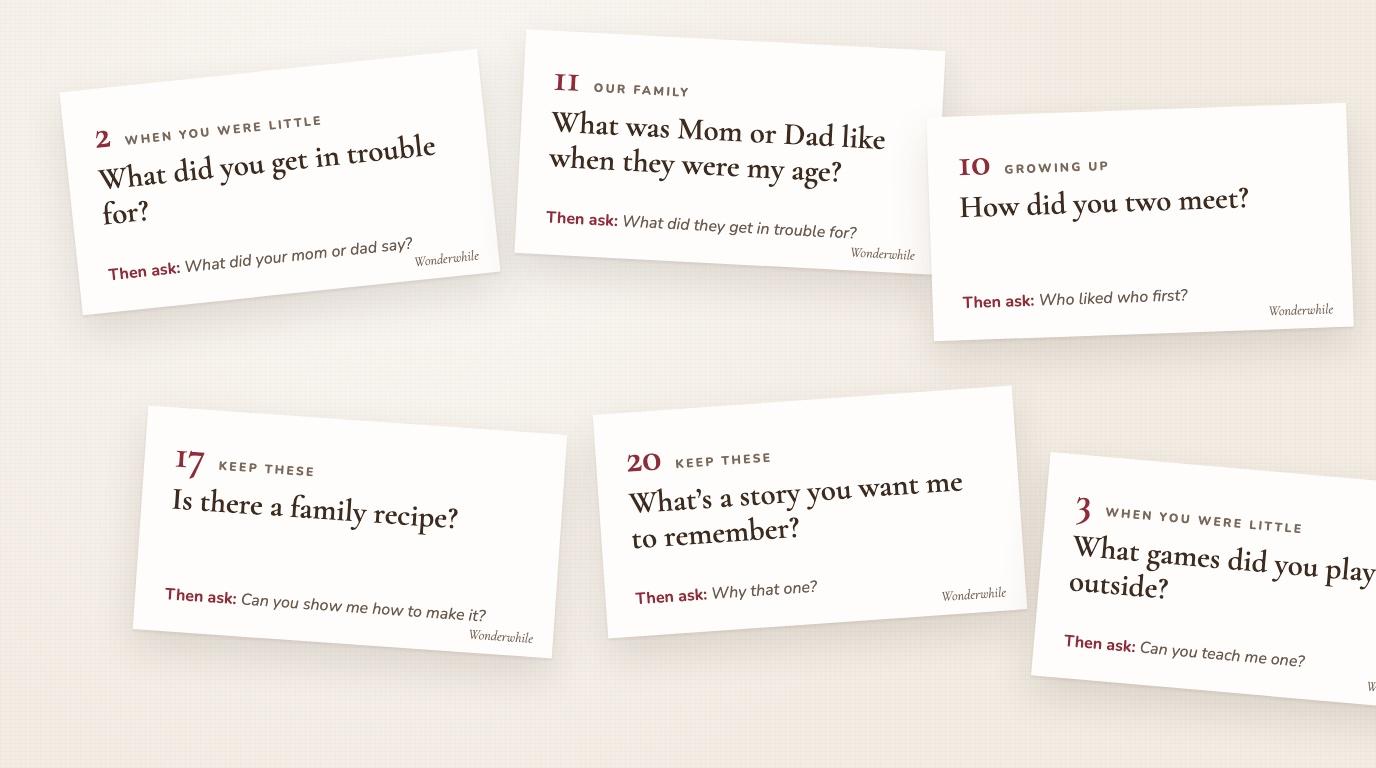
Bedtime, the car and a walk are good times for it. If you need a way in, here are 30 questions to ask instead of "How was your day?"
2. Tell them the family stories
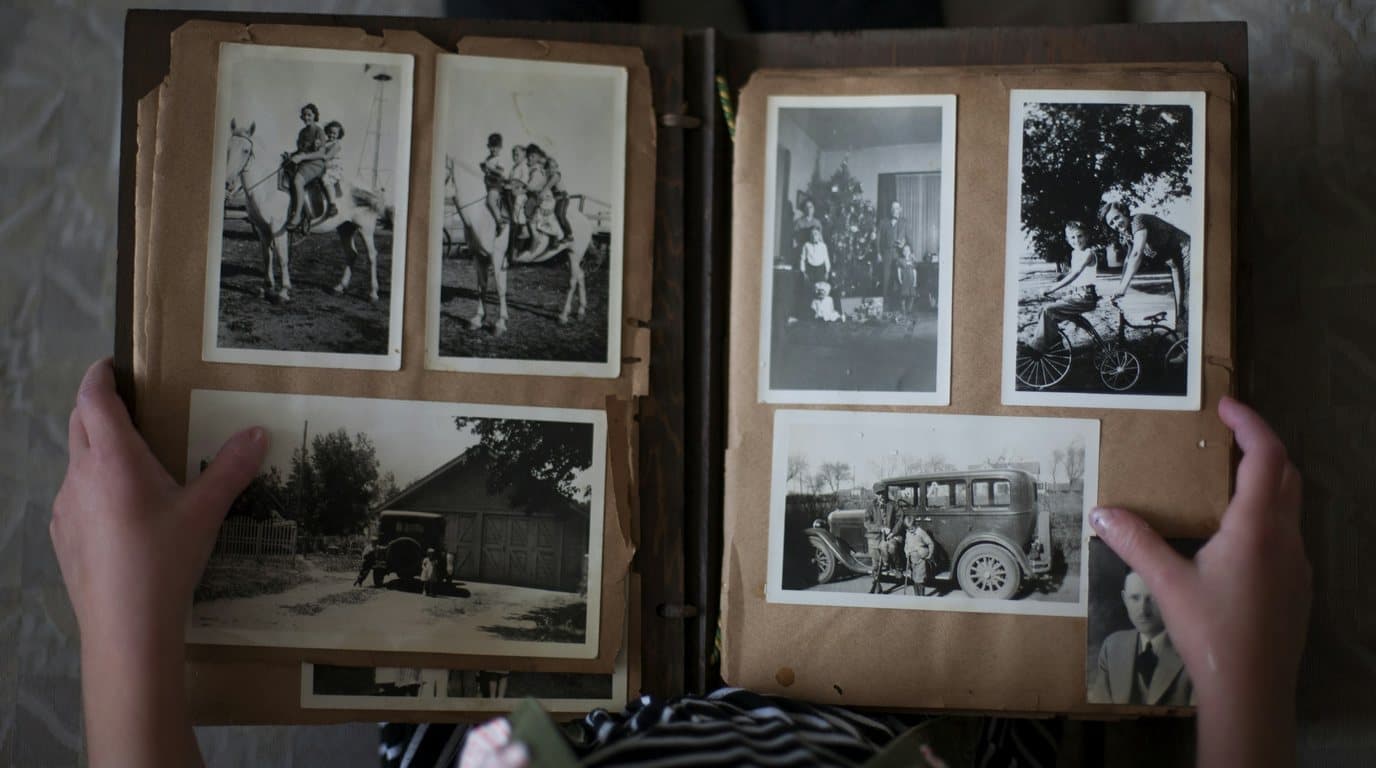
Kids love hearing about themselves. The day they were born. Their first word. The time they ate a crayon at Grandma's. Hearing those stories again and again is how they come to know them, even when the memory itself is long gone.
There's research here too. Marshall Duke and Robyn Fivush at Emory asked kids 20 questions about their family's history, and found that teens who knew more of the answers had higher self-esteem and felt more in control of their lives. It was a small study of 66 teens, and it shows a link, not a cause: families who tell more stories may differ in other ways too. Treat it as a nudge, not a guarantee. If you're seeing grandparents soon, these questions are a good way to get the old stories told.
3. Write it down, so someone can tell it later
Talking about the zoo trip helps a 3-year-old remember it at 6. But by 9, the research says, most of it will still fade. The only way it comes back is if someone kept it.
Our oldest is three. One night I heard him tuck his bear into bed, whispering, "You're safe now. I'm going to be right outside." By the research, he probably won't remember saying it. But it's written down, so one day I can read it to him.
That's the real trick. You're not just writing for you. You're writing the stories you'll tell them later, about the years they can't get back on their own.
You don't need much:
- Write it the same day. Tomorrow, the details are already going.
- Use their words. "He said the moon was following us" beats "cute moment in the car."
- Keep it short. A few lines is plenty. A long entry you never write is worth less than a short one you do.
- Split it with your partner. Kids say different things to different people. Whoever did bedtime writes the bedtime one. Between you, you catch most of the day.
What about photos?
You probably have thousands. They help, but they don't do the remembering for you.
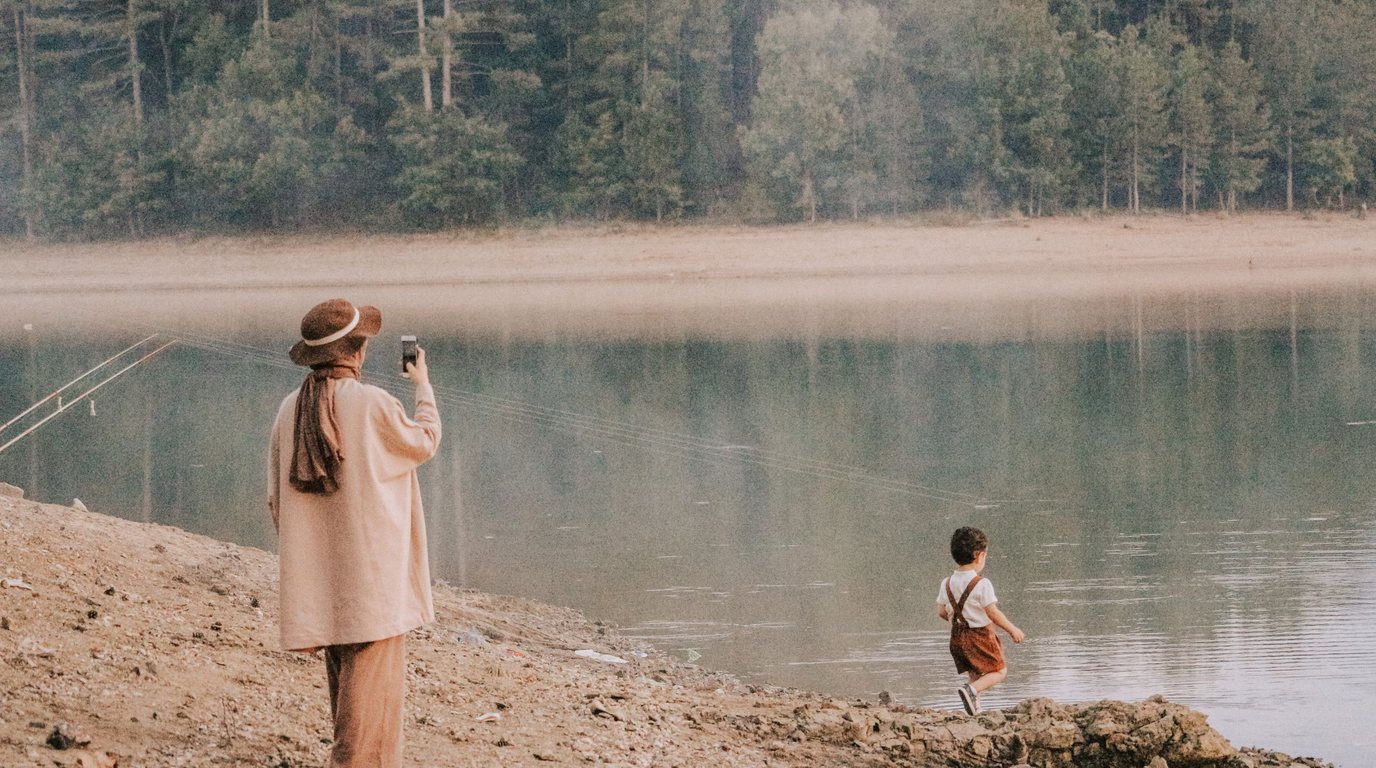
In a 2014 study, psychologist Linda Henkel took students on a museum tour and had them either look at objects or photograph them (the study). The next day, they remembered fewer of the objects they'd photographed, and fewer details about them. But when they zoomed in on one part of an object, paying close attention to it, the memory gap disappeared. Those were adults in a museum, not kids at home, but the point carries over: snapping and moving on can stand in for noticing.
A photo shows what something looked like. It can't tell you what they said, or why it was funny. Keep the photo, and add the line that goes with it.
What to write down
The big days take care of themselves. These are the things that slip away:
- Their exact words, especially the ones they say wrong. (Here's why those are worth keeping.)
- What they're into right now. The song on repeat, the toy that goes everywhere, the question they keep asking.
- The routines. How bedtime goes. What they eat for breakfast. Those feel permanent, and then one day they're not.
- Firsts and lasts. The first time they buckled their own seatbelt. The last time they asked to be carried.
- Who they love. The friend from daycare, the neighbour's cat, the grandparent they light up for.
Your kid won't remember this year. You can.
That's the whole reason Wonderwhile™ exists. You and your partner each add a few lines about the day, as text, a voice note or a photo, and the next morning they come back as one story of the day, told from both your sides. It takes a minute, there's no streak to keep, and in a few years those are the stories you read them, about the years they were too little to keep.
Still choosing where to write it all down? Here's how the family journal apps compare.
Not sure what to write down first? Here are 46 prompts to start with.